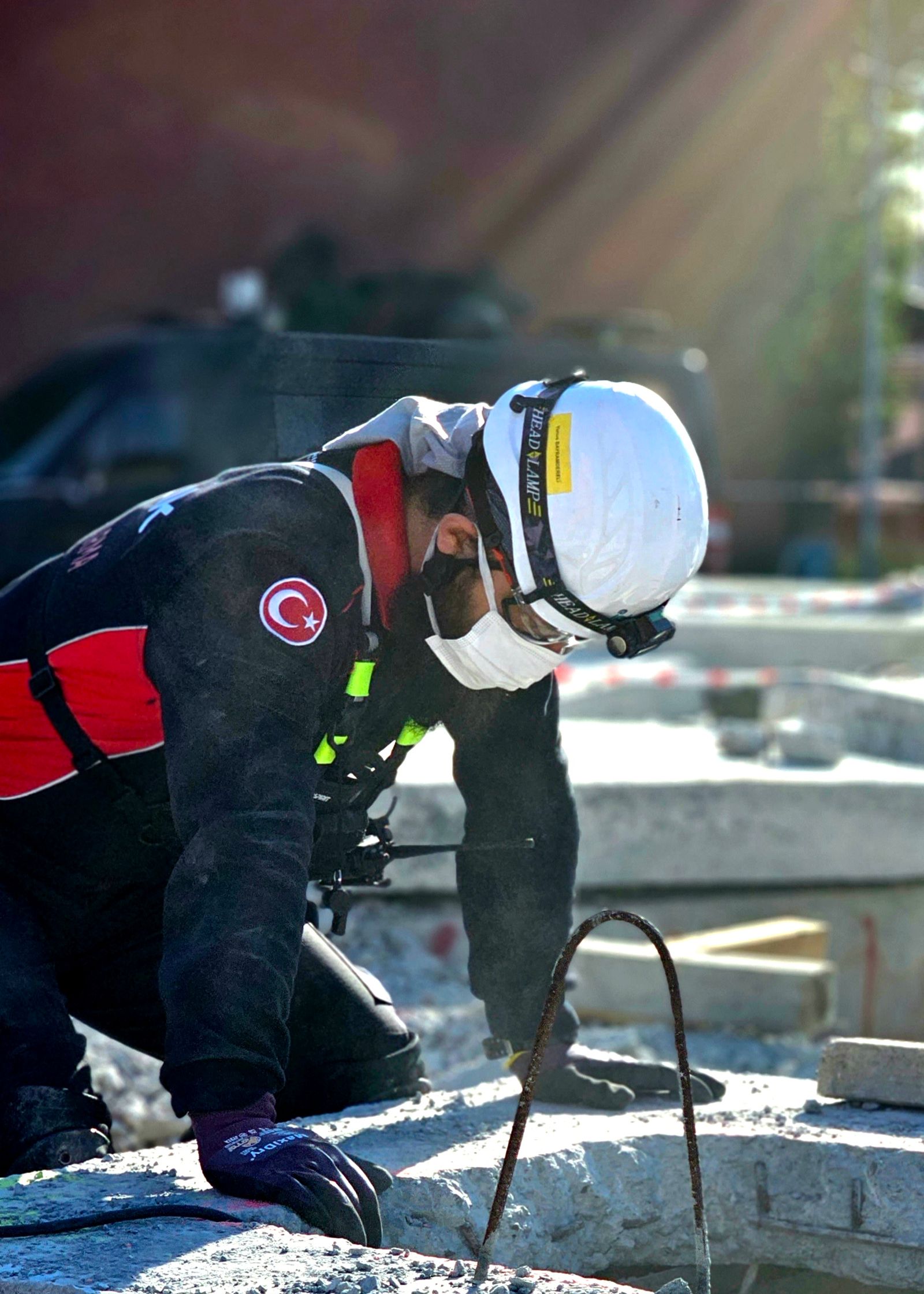
Work can be carefully planned within each organisation and still become difficult where their activities meet. The interface deserves its own review: who provides information, who controls the area and who can authorise a change?
Map the hand-offs
For a fictional maintenance task, list the decisions that pass between operations, a contractor and a specialist subcontractor. Include isolation, access, testing, changes in scope and return to service.
The aim is not to invent a universal allocation of legal duties. Those duties depend on applicable law and the circumstances. It is to identify decisions that might otherwise be assumed to belong to somebody else.
Check the information on both sides
Does the contractor know the process conditions and adjacent work? Does the host understand what the contractor's method introduces? A document exchange can be complete while the practical conversation remains incomplete.
Use a walk-through to test whether the work can be done as described. HSE's human factors resources offer useful lines of enquiry on procedures, communication and the organisation of work. [1]
Plan for a change, not only the starting condition
Clarify what stops the job and triggers a review: a changed operating condition, unavailable isolation point, different material or an unexpected task. Identify who can resolve the issue and how the revised arrangement reaches everybody affected.
A responsible person's name on a form is useful only if that person has the information, time and authority to act.
Verify the return to normal work
Closure includes confirming that protections are restored, tools and materials are accounted for and the receiving team understands any residual restriction. Specify the evidence needed for the handover.
Where an incident or near miss reveals an interface weakness, examine and act on the finding rather than stopping at the identity of the employer involved. HSE's investigation guidance provides a structured starting point. [2]
Sources & context
- HSE: Human factors and ergonomics Health and Safety Executive · Great Britain
- HSE: Investigating accidents and incidents (HSG245) Health and Safety Executive · Great Britain
Source-linked editorial material, prepared 2026-09-05; updated 2026-09-05. Prepared with AI assistance. Not independently peer-reviewed. Sources and legal requirements can change. The linked organisations do not endorse this publication. Our editorial approach.
What would you add?
Where do handovers between organisations most often become unclear?
Connecting to the discussion...